
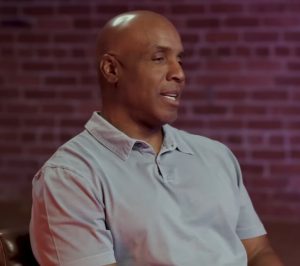
Barry Bonds’ connection to the BALCO steroid scandal became one of the defining controversies of baseball’s steroid era, following the San Francisco Giants star through his pursuit of Major League Baseball’s most prestigious home-run records and ultimately into federal court.
Bonds acknowledged using substances supplied by his personal trainer that prosecutors identified as performance-enhancing drugs, but he testified that he did not know they were steroids. Federal prosecutors later charged him with lying about his drug use. Bonds was never convicted of perjury: jurors could not reach verdicts on the false-statement charges, and the one obstruction-of-justice conviction they returned in 2011 was overturned by a federal appeals court in 2015.
The legal outcome did not erase the larger steroid controversy. Court filings contained drug-test results prosecutors attributed to Bonds, investigative journalists reported extensive evidence of performance-enhancing-drug use, and his connection to BALCO became a major reason he has remained outside the National Baseball Hall of Fame despite holding MLB’s career and single-season home-run records.
What Was The Barry Bonds Steroid Scandal?
The scandal centered on whether Bonds knowingly used steroids and other performance-enhancing drugs supplied through people connected to the Bay Area Laboratory Co-operative, commonly known as BALCO.
BALCO was a California laboratory that became the center of a federal investigation into the distribution of performance-enhancing drugs to elite athletes.
Bonds’ personal trainer, Greg Anderson, had connections to BALCO and its founder, Victor Conte. Federal investigators eventually discovered records, drug-testing information and other material that prosecutors said linked Bonds to steroids and other performance-enhancing substances.
The scandal became especially significant because Bonds was simultaneously producing some of the greatest offensive seasons in baseball history, including his record 73-home-run season in 2001.
What Was BALCO?
BALCO stood for Bay Area Laboratory Co-operative, a laboratory in Burlingame, California, founded by Victor Conte.
Federal authorities investigated BALCO for distributing performance-enhancing drugs to athletes in baseball, football and track and field.
One of the most important substances associated with BALCO was tetrahydrogestrinone, or THG, a designer anabolic steroid nicknamed “the clear.” Because available drug tests initially did not detect THG, athletes could potentially use it without triggering conventional steroid tests.
The BALCO investigation eventually implicated numerous prominent athletes and became one of the biggest doping investigations in American sports. [U.S. Department of Justice]
Who Was Greg Anderson?
Greg Anderson was Bonds’ personal trainer and childhood friend, and he became the principal connection between Bonds and the BALCO investigation.
Bonds testified that he resumed working with Anderson in the late 1990s. Anderson subsequently took samples of Bonds’ blood and urine to BALCO and provided Bonds with supplements and other substances.
Anderson eventually pleaded guilty in the BALCO case to conspiracy to distribute steroids and money laundering.
His refusal to testify against Bonds later complicated the government’s criminal case. Anderson spent time jailed for contempt after refusing to testify before grand juries investigating Bonds.
What Were “The Clear” And “The Cream”?
“The clear” and “the cream” were two substances at the center of the BALCO doping operation.
“The clear” referred to THG, an anabolic steroid specifically designed to evade standard drug testing at the time.
“The cream” was a topical substance associated with BALCO that contained testosterone and other ingredients.
Bonds acknowledged during his 2003 federal grand-jury testimony that Anderson had given him a clear substance and a cream. The central dispute was whether Bonds knew what those substances actually were.
Did Barry Bonds Admit Using “The Clear” And “The Cream”?
Yes. Bonds acknowledged using substances fitting those descriptions, but he testified that he did not know they were steroids.
According to a transcript of his December 2003 grand-jury testimony reviewed by the San Francisco Chronicle, Bonds said Anderson gave him a clear substance and a cream during the 2003 season.
Bonds said Anderson had represented the clear substance as flaxseed oil and the cream as a rubbing balm used for arthritis. [San Francisco Chronicle]
That distinction became crucial to the subsequent criminal investigation. The question was not simply whether Bonds had used substances later identified as performance-enhancing drugs, but whether he knowingly used them and then lied about that knowledge under oath.
Did Barry Bonds Admit Knowingly Taking Steroids?
No. Bonds consistently maintained that he did not knowingly use steroids.
During his grand-jury testimony, Bonds denied knowingly taking steroids and said he trusted Anderson because the two had been friends for years.
When prosecutors questioned Bonds about records they believed connected him with steroids, Bonds disputed their meaning or said he had not seen the documents before. [ESPN]
Prosecutors later alleged that those denials were false, leading to Bonds’ indictment.
Did Barry Bonds Test Positive For Steroids?
Federal prosecutors presented or sought to present several drug-test results that they said were connected to Bonds, although Bonds’ attorneys challenged whether some of the samples could reliably be linked to him.
Government court filings stated that BALCO records showed urine samples associated with Bonds testing positive on three occasions in 2000 and 2001 for the anabolic steroid methenolone. Two of those samples also allegedly tested positive for nandrolone. [Federal Court Filing]
Prosecutors also said a urine sample Bonds provided during MLB’s anonymous 2003 survey-testing program was later retested by federal investigators and showed evidence of THG. [AP/ESPN]
However, the legal significance of those tests was disputed. Bonds’ lawyers challenged the chain of custody and whether certain BALCO samples could conclusively be established as belonging to him.
A federal appeals court ultimately upheld rulings preventing prosecutors from introducing three of the BALCO tests at his criminal trial without testimony from Anderson authenticating them. [AP/CBS News]
Did Barry Bonds Ever Fail An MLB Steroid Test And Get Suspended?
Bonds was never suspended by Major League Baseball for a steroid violation.
That does not mean there was no drug-testing evidence associated with him.
The timing of baseball’s testing rules is important. Anabolic steroids had been expressly listed among MLB’s prohibited substances since 1991, but the league did not have a collectively bargained, mandatory testing program for Major League players during most of the period in which Bonds was accused of using them.
MLB and the Players Association instituted anonymous survey testing in 2003. The results showed enough positive tests to trigger mandatory random testing beginning in 2004. [Mitchell Report]
The 2003 program was designed as a survey rather than a disciplinary program, so players were not suspended based on those results. MLB later strengthened its testing and punishment system. [MLB]
What Did Game Of Shadows Allege About Barry Bonds?
The 2006 book Game of Shadows alleged that Bonds knowingly began an extensive performance-enhancing-drug program after the 1998 season.
The book was written by San Francisco Chronicle investigative reporters Mark Fainaru-Wada and Lance Williams, whose BALCO reporting was based on court records, documents and interviews.
The authors said their reporting involved more than 1,000 pages of documents and interviews with more than 200 people. [San Francisco Chronicle]
They alleged that Bonds began using steroids after watching Mark McGwire and Sammy Sosa receive enormous attention for their 1998 home-run race.
The book alleged that Bonds used a variety of performance-enhancing substances over the following seasons, including Winstrol, testosterone, human growth hormone and BALCO’s “clear” and “cream.” [ESPN]
Those claims went substantially beyond what Bonds himself acknowledged. Bonds did not accept the book’s characterization that he knowingly undertook a steroid program.
Did Barry Bonds Start Using Steroids Because Of Mark McGwire And Sammy Sosa?
That was an allegation made by the authors of Game of Shadows, not a fact established by Bonds’ testimony or a criminal verdict.
Fainaru-Wada and Williams reported that Bonds was frustrated by the attention McGwire and Sosa received during their 1998 home-run chase and decided afterward to begin using performance-enhancing drugs.
The book placed the start of his alleged steroid use in the offseason following the 1998 season. [San Francisco Chronicle]
Bonds did not admit that account.
What Happened To Barry Bonds’ Statistics After 1998?
Bonds was already one of baseball’s greatest players before the period associated with the steroid allegations, but his offensive production became historically extreme during his late 30s.
He had already won three National League MVP awards by the end of 1993 and had established himself as an elite combination of power, speed, defense and plate discipline.
Beginning in 2000, his home-run totals surged:
| Season | Age | Home Runs | OPS |
|---|---|---|---|
| 1998 | 33 | 37 | 1.047 |
| 1999 | 34 | 34 | 1.006 |
| 2000 | 35 | 49 | 1.127 |
| 2001 | 36 | 73 | 1.379 |
| 2002 | 37 | 46 | 1.381 |
| 2003 | 38 | 45 | 1.278 |
| 2004 | 39 | 45 | 1.422 |
Bonds ultimately finished his 22-year career with a .298 batting average, .444 on-base percentage, 762 home runs and 514 stolen bases. [MLB]
Did Barry Bonds Break The Single-Season Home Run Record?
Yes. Bonds hit 73 home runs for the San Francisco Giants in 2001, setting the MLB single-season record.
Mark McGwire had established the previous record with 70 home runs in 1998.
Bonds’ 73 remains MLB’s official single-season record. [Baseball Hall of Fame]
Because the season occurred during the period covered by steroid allegations and BALCO evidence, the record became inseparable from the larger debate over performance-enhancing drugs in baseball.
Did Barry Bonds Break Hank Aaron’s Career Home Run Record?
Yes. Bonds hit career home run No. 756 on August 7, 2007, surpassing Hank Aaron’s long-standing record of 755.
Bonds eventually finished with 762 career home runs. MLB continues to recognize him as its official career home-run leader. [MLB]
| Player | Career Home Runs |
|---|---|
| Barry Bonds | 762 |
| Hank Aaron | 755 in the historical MLB record used when Bonds passed him; current MLB statistical integration lists Aaron with 733 NL home runs plus his AL total |
| Babe Ruth | 714 |
Did MLB Put An Asterisk On Barry Bonds’ Records?
No. MLB’s official records do not place an asterisk beside Bonds’ 73-home-run season or his 762 career home runs.
Those numbers remain recognized in MLB’s official statistical records. [MLB]
Fans, writers and historians continue to debate how steroid-era records should be evaluated, but MLB has not removed Bonds’ records.
Why Was Barry Bonds Indicted?
A federal grand jury indicted Bonds in November 2007 because prosecutors alleged that he lied during his 2003 BALCO grand-jury testimony.
The original indictment charged Bonds with four counts of perjury and one count of obstruction of justice.
Prosecutors alleged that Bonds knowingly made false statements about whether he had used anabolic steroids and other performance-enhancing substances and whether Anderson had injected him with drugs. [U.S. Department of Justice]
The Justice Department emphasized at the time that an indictment represented allegations rather than proof of guilt.
Was Barry Bonds Convicted Of Lying About Steroids?
No. Bonds was not convicted of perjury or making false statements about steroid use.
At his 2011 trial, jurors could not reach unanimous verdicts on the charges alleging that Bonds lied about receiving steroids, human growth hormone or injections.
The judge declared mistrials on those counts.
The jury did convict Bonds on a separate obstruction-of-justice charge based on an evasive answer he gave during the 2003 grand-jury testimony.
What Was Barry Bonds’ Obstruction Conviction?
The one conviction Bonds received was based on a rambling answer he gave when prosecutors asked whether Anderson had ever injected him with anything.
Rather than directly answering the question, Bonds spoke about being a “celebrity child” and his experiences growing up as the son of Major League player Bobby Bonds.
Prosecutors argued that the answer was intentionally evasive and obstructed the grand jury’s investigation.
The jury convicted him on that obstruction count in April 2011 while failing to reach verdicts on the other charges. [Federal Appeals Court]
Was Barry Bonds’ Conviction Overturned?
Yes. The Ninth U.S. Circuit Court of Appeals overturned Bonds’ obstruction-of-justice conviction in 2015.
An 11-judge en banc panel concluded that there was insufficient evidence that the particular answer on which his conviction rested was materially capable of obstructing the grand jury investigation.
The court ordered the conviction and sentence vacated and held that Bonds could not be retried on that count because reversing a conviction for insufficient evidence triggers double-jeopardy protections. [Ninth Circuit]
That means Bonds finished the federal prosecution without a surviving criminal conviction.
Did The Court Rule That Barry Bonds Never Used Steroids?
No. The 2015 ruling did not decide whether Bonds used steroids.
This is an important distinction.
The appeals court considered whether Bonds’ particular grand-jury answer legally supported an obstruction conviction. It ruled that the evidence was insufficient to establish the required materiality for that offense. [Ninth Circuit]
The decision did not make a factual finding that Bonds had never taken performance-enhancing drugs.
Likewise, the government’s failure to obtain a perjury conviction did not establish that every statement Bonds made about PEDs was true. It meant prosecutors did not obtain unanimous guilty verdicts on those charges.
Was Barry Bonds Ever Convicted Of Steroid Use?
No.
Using steroids was not itself the central crime charged in Bonds’ federal case. Prosecutors accused him of lying under oath and obstructing the BALCO grand-jury investigation.
Bonds was never criminally convicted of possessing or using steroids.
Why Didn’t Greg Anderson Testify Against Barry Bonds?
Anderson repeatedly refused to testify against Bonds.
That created a significant problem for prosecutors because Anderson was the person allegedly supplying Bonds with the substances and was potentially crucial for authenticating drug samples and records.
Anderson was jailed multiple times for contempt after refusing to testify.
His refusal contributed to court rulings excluding several pieces of evidence prosecutors hoped to present to the jury because the government could not establish the necessary evidentiary foundation. [AP/CBS News]
Did The Steroid Scandal End Barry Bonds’ Career?
Bonds played through the 2007 season, when he broke Aaron’s home-run record, and never appeared in another Major League game.
He finished 2007 hitting .276 with 28 home runs and an MLB-leading .480 on-base percentage at age 42. [MLB]
The Giants did not re-sign him, and no other club subsequently signed him.
Bonds officially ended his career with 762 home runs, 2,558 walks, seven National League MVP awards, eight Gold Gloves and 14 All-Star selections. [Baseball Hall of Fame]
Is Barry Bonds In The Baseball Hall Of Fame?
No. Bonds is not a member of the National Baseball Hall of Fame as of 2026.
His performance-enhancing-drug connections became the central issue surrounding his Hall of Fame candidacy.
Bonds appeared on the Baseball Writers’ Association of America ballot for the maximum 10 years. Candidates need 75% of the vote for election.
In his tenth and final BBWAA election in 2022, Bonds received 66.0%, leaving him short of induction. [Baseball Hall of Fame]
Can Barry Bonds Still Make The Hall Of Fame?
Bonds is no longer eligible for the writers’ ballot, but he can potentially be considered through the Hall of Fame’s Era Committee process.
He appeared on the Contemporary Baseball Era Committee ballot for the Class of 2026.
The 16-member committee elected former Giants second baseman Jeff Kent. Bonds received fewer than five votes, far below the 12 required for election. [Baseball Hall of Fame]
Under Hall of Fame rules introduced for that cycle, a candidate receiving fewer than five votes cannot appear on the next Contemporary Baseball Era player ballot. That means Bonds is not eligible for the committee’s 2028 vote for the Class of 2029, although the rule does not permanently eliminate all possibility of later consideration. [Baseball Hall of Fame]
How Good Was Barry Bonds Before The Steroid Allegations?
Bonds was already an historically accomplished player before the period in which major steroid allegations begin.
By the end of the 1998 season, he had already:
- Won three National League MVP awards.
- Won eight Gold Gloves.
- Hit 411 career home runs.
- Stolen 445 bases.
- Produced the first 40-home-run, 40-stolen-base season of his career in 1996.
- Become the first player in MLB history to record 400 home runs and 400 stolen bases.
That history is one reason the Bonds debate is unusually complicated. His statistical case for being one of baseball’s greatest players was already exceptionally strong before the seasons most closely associated with the BALCO controversy.
What Records Does Barry Bonds Still Hold?
Bonds continues to hold several major MLB records, including:
- 762 career home runs — MLB record.
- 73 home runs in 2001 — single-season MLB record.
- 2,558 career walks — MLB record.
- 688 career intentional walks — MLB record.
- 232 walks in 2004 — single-season MLB record.
- 120 intentional walks in 2004 — single-season MLB record.
- .609 on-base percentage in 2004 — single-season MLB record.
- .863 slugging percentage in 2001 — single-season MLB record.
- Seven MVP awards — most in MLB history.
Barry Bonds Steroid Scandal Timeline
| Year | Development | ||
|---|---|---|---|
| 1998 | Bonds finishes the season with 37 home runs. | ||
| Game of Shadows later alleges that he began using steroids after this season. | |||
| 2000-01 | Federal prosecutors later say BALCO records contain several positive steroid tests associated with Bonds. | ||
| Bonds testifies before a federal grand jury and acknowledges using a clear substance and cream from Anderson but says he did not know they were steroids. | |||
| 2004 | The San Francisco Chronicle publishes details of Bonds’ previously secret BALCO testimony. | ||
| 2006 | Game of Shadows is published, alleging extensive and knowing PED use by Bonds. | ||
| A federal grand jury indicts him for perjury and obstruction of justice. | |||
| 2011 | A jury deadlocks on the false-statement charges but convicts Bonds on one obstruction-of-justice count. | ||
| 2015 | The Ninth Circuit overturns the obstruction conviction because of insufficient evidence. | ||
| 2025 | The Contemporary Baseball Era Committee considers Bonds for the Hall’s Class of 2026 but gives him fewer than five votes. | ||
[U.S. Department of Justice] [Ninth Circuit] [Baseball Hall of Fame]
Barry Bonds Steroid Scandal FAQ
Did Barry Bonds use steroids?
Bonds acknowledged using substances supplied by Greg Anderson that prosecutors and investigators identified as performance-enhancing drugs, including substances corresponding to BALCO’s “clear” and “cream.” Bonds testified that he did not know the substances were steroids. Investigative reporting and federal prosecutors presented additional evidence alleging knowing steroid use.
Did Barry Bonds admit to knowingly using steroids?
No. Bonds maintained that Anderson told him the clear substance was flaxseed oil and the cream was an arthritis balm.
Did Barry Bonds test positive for steroids?
Federal court filings described multiple positive steroid tests that prosecutors attributed to Bonds, including BALCO samples from 2000 and 2001 and a retest of a 2003 MLB survey sample. Bonds’ lawyers disputed whether some BALCO samples could reliably be connected to him, and several tests were excluded from his criminal trial because of authentication issues.
Was Barry Bonds suspended for steroids?
No. MLB never suspended Bonds for a steroid violation.
What was BALCO?
BALCO was the Bay Area Laboratory Co-operative, a California company at the center of a federal investigation into the distribution of steroids and other performance-enhancing drugs to elite athletes.
Who was Greg Anderson?
Anderson was Bonds’ personal trainer and childhood friend. He was connected to BALCO, pleaded guilty to steroid-distribution-related charges and repeatedly refused to testify against Bonds.
What was “the clear”?
“The clear” was THG, a designer anabolic steroid developed to be difficult for conventional drug-testing programs of the era to detect.
What was “the cream”?
“The cream” was a topical BALCO product associated with testosterone and designed to be applied to the skin.
Was Barry Bonds convicted of perjury?
No. The jury could not reach verdicts on the charges alleging that he made false statements about performance-enhancing drugs.
Was Barry Bonds convicted of obstruction of justice?
He initially was in 2011, but the conviction was overturned by the Ninth U.S. Circuit Court of Appeals in 2015 because the evidence was insufficient to support it. [Ninth Circuit]
Was Barry Bonds cleared of steroid use by the court?
No. The appeals court ruling concerned whether one of Bonds’ grand-jury answers legally constituted obstruction of justice. It did not determine whether Bonds had or had not used steroids.
Does Barry Bonds still hold the home-run record?
Yes. MLB officially credits Bonds with 762 career home runs and a record 73 home runs in the 2001 season. [MLB]
Did MLB put an asterisk on Barry Bonds’ records?
No. His statistics remain part of MLB’s official record book without an official asterisk.
Is Barry Bonds in the Hall of Fame?
No. Bonds received 66.0% of the BBWAA vote in his final year of writers’ eligibility in 2022, below the required 75%. He later received fewer than five votes from the Contemporary Baseball Era Committee considering the Hall of Fame Class of 2026. [Baseball Hall of Fame]
Can Barry Bonds still eventually enter the Hall of Fame?
Potentially. He is no longer eligible for the BBWAA ballot and, because he received fewer than five votes in the 2025 Era Committee election, cannot appear on the next Contemporary Baseball Era player ballot in 2028. Hall rules leave open the possibility of consideration in a later cycle. [Baseball Hall of Fame]
Why is Barry Bonds’ steroid scandal still controversial?
Bonds combines an extraordinary statistical record with unusually extensive evidence and reporting surrounding performance-enhancing drugs, while never receiving a surviving criminal conviction for his statements about those drugs and never serving an MLB steroid suspension. That combination has left his records officially intact while continuing to shape arguments over his legacy and Hall of Fame candidacy.