Steve Gleason produced one of the most famous plays in New Orleans Saints history when he blocked an Atlanta Falcons punt during the emotional reopening of the Superdome after Hurricane Katrina in 2006.
But the former Saints safety’s legacy eventually became much larger than football.
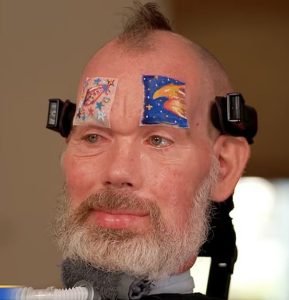
Gleason was diagnosed with amyotrophic lateral sclerosis, or ALS, in 2011. The progressive neurological disease has taken away his ability to walk, speak and breathe independently, but Gleason has spent the years since his diagnosis becoming one of the country’s most prominent advocates for people living with ALS.
He founded Team Gleason, helped push federal legislation expanding access to communication technology, received the Congressional Gold Medal and has continued using eye-tracking technology to communicate, write and create.
Twenty years after his famous blocked punt, Gleason returned to the Caesars Superdome for the Saints’ October 5, 2026 “Domecoming” anniversary celebration, bringing his football and ALS legacies together on the same field.
Why Is Steve Gleason Back In The News?
The Saints celebrated the 20th anniversary of their historic return to the Superdome when New Orleans hosted the Atlanta Falcons on Monday Night Football on October 5, 2026.
Gleason and former Saints cornerback Curtis Deloatch were honored as the team’s Legends of the Game. Gleason also led the pregame “Who Dat” chant inside the Superdome. [New Orleans Saints]
Before the game, Gleason reunited with Michael Koenen, the former Falcons punter whose kick Gleason blocked in 2006, at the bronze statue commemorating the play outside the stadium. [Saints]
The anniversary celebration also included members of the 2006 team and New Orleans musicians as the franchise revisited a night that became inseparable from the city’s recovery following Hurricane Katrina. [Saints]
Who Is Steve Gleason?
Steve Gleason is a former New Orleans Saints safety and special-teams standout who became one of the franchise’s most beloved players despite never becoming an NFL superstar in the traditional statistical sense.
After playing football and baseball at Washington State, Gleason entered the NFL as an undrafted player in 2000. The Saints signed him that year, and he developed a reputation for aggressive special-teams play.
Gleason eventually became a Saints special-teams captain and blocked four punts during his career. He missed the 2007 season because of a knee injury and announced his retirement in 2008. [Saints]
One of those four blocked punts, however, became much more important than a normal special-teams play.
What Was The Saints’ Domecoming Game?
Hurricane Katrina devastated New Orleans in August 2005 and severely damaged the Louisiana Superdome, which had also been used as an emergency shelter during the disaster.
The Saints were forced to play their 2005 home schedule away from New Orleans.
After extensive repairs, the Superdome reopened on September 25, 2006, when the Saints hosted their NFC South rival Atlanta Falcons on Monday Night Football.
The game became known as the Saints’ “Domecoming.”
It was the franchise’s first game in the Superdome in more than a year and carried enormous symbolic importance for a city still rebuilding from Katrina. U2 and Green Day performed before the game, while New Orleans music legends Irma Thomas and Allen Toussaint participated in the national anthem. [Saints]
What Did Steve Gleason Do In The Domecoming Game?
Atlanta received the ball first but failed to gain a first down.
The Falcons sent punter Michael Koenen onto the field.
Gleason recognized an opportunity in Atlanta’s punt protection. At the snap, he crossed from one interior gap to another, broke cleanly through the line and dove toward Koenen with his arms extended.
The football struck Gleason’s hands.
The Superdome erupted.
Saints cornerback Curtis Deloatch recovered the loose ball in the end zone for a touchdown, giving New Orleans its first score of the night. [Saints Oral History]
The Saints eventually defeated Atlanta 23-3, improving to 3-0 under first-year head coach Sean Payton and new quarterback Drew Brees. [Saints]
Did Steve Gleason Score The Touchdown?
No.
Gleason blocked the punt, but Curtis Deloatch recovered the football in the end zone and was credited with the touchdown.
Gleason nevertheless became the player most closely associated with the moment because his perfectly timed block created the score.
The Saints later immortalized the exact moment of Gleason diving in front of Koenen with a bronze sculpture named Rebirth outside the Superdome. [Saints]
Why Was Gleason’s Blocked Punt So Important?
In purely football terms, it was an early touchdown in a regular-season game.
Its significance came from everything surrounding it.
New Orleans had endured catastrophic flooding, widespread destruction and mass displacement following Katrina. The Saints themselves had spent the previous season playing home games in multiple cities.
The reopening of the Superdome represented another step toward normal life returning to New Orleans.
When Gleason burst through the Falcons’ line and blocked the punt only minutes into the game, the play provided an almost cinematic beginning to the Saints’ return.
The Saints went on to finish 10-6, win the NFC South and reach the NFC Championship Game for the first time in franchise history.
Twenty years later, the play remains one of the defining images of the franchise and the post-Katrina era in New Orleans. [Associated Press]
When Was Steve Gleason Diagnosed With ALS?
Gleason was diagnosed with ALS in January 2011, three years after his retirement from football.
He publicly revealed the diagnosis on September 25, 2011 — exactly five years after the famous blocked punt. [NFL]
ALS is short for amyotrophic lateral sclerosis and is sometimes called Lou Gehrig’s disease.
It is a progressive neurodegenerative disease that attacks the motor neurons responsible for controlling voluntary muscles. As the disease progresses, patients can lose the ability to walk, move their limbs, speak, swallow and breathe independently. There is currently no cure. [Team Gleason]
How Has ALS Affected Steve Gleason?
Gleason has lived with ALS far longer than the typical prognosis he initially received.
He has lost the ability to move, speak and breathe independently and uses a ventilator along with sophisticated assistive technology.
Gleason communicates using eye-tracking equipment that allows him to control a computer by moving his eyes. Team Gleason has listed a Microsoft Surface computer and Tobii eye-gaze tracker among the technology he has used to communicate. [Team Gleason]
The same type of technology has allowed Gleason to continue writing and communicating with his family, friends and the public.
He used eye-tracking technology to help write his memoir, A Life Impossible: Living With ALS: Finding Peace And Wisdom Within A Fragile Existence, which was published in 2024. [Saints]
What Is Team Gleason?
Gleason and his wife, Michel Varisco Gleason, created Team Gleason after his ALS diagnosis.
The nonprofit’s mission is to help people with ALS continue living productive and meaningful lives by providing technology, equipment, services and experiences.
Team Gleason says it has provided more than $65 million in technology, equipment, adventures, care services and other direct support since 2011. [Team Gleason]
Assistive communication technology has become a particularly important part of its work.
The organization helps ALS patients obtain speech-generating devices, eye-gaze equipment, mobility technology, voice-banking services and other tools that can preserve independence as muscle function deteriorates. [Team Gleason]
What Is The Steve Gleason Act?
Gleason’s advocacy also produced a significant change in federal health policy.
The Steve Gleason Act of 2015 changed Medicare rules governing speech-generating devices used by people who can no longer speak.
The law expanded access to eye-tracking and gaze-interaction accessories and changed Medicare’s treatment of speech-generating devices so that patients would not lose essential communication equipment because of capped-rental rules. [U.S. Government Publishing Office]
President Barack Obama signed the legislation into law on July 30, 2015. [White House Archives]
For people with advanced ALS, eye-tracking technology can be one of the few remaining ways to communicate independently, making access to those devices an issue far beyond convenience.
Why Did Steve Gleason Receive The Congressional Gold Medal?
Congress awarded Gleason the Congressional Gold Medal in recognition of his ALS advocacy and work helping people with neuromuscular diseases.
He received the medal during a ceremony at the U.S. Capitol on January 15, 2020.
The Congressional Gold Medal is Congress’ highest civilian honor, and Gleason became the first former professional football player to receive one. [U.S. House Of Representatives]
The honor recognized both his advocacy for people with ALS and his efforts to improve access to technology that allows people with disabilities to communicate and live more independently.
What Other Honors Has Steve Gleason Received?
Gleason received the Arthur Ashe Award for Courage at the 2024 ESPYS.
Drew Brees presented the award to his former teammate as ESPN recognized Gleason’s ALS advocacy and the impact of Team Gleason. [ESPN]
His life with ALS was also documented in the acclaimed 2016 documentary Gleason, which followed Gleason, Michel and their family after his diagnosis.
The Saints’ Rebirth statue ensures that his football legacy is permanently represented outside the Superdome.
What Did Steve Gleason Do For The 20th Anniversary Of The Domecoming?
The Saints brought Gleason back to the center of the celebration when they marked the game’s 20th anniversary on October 5, 2026.
Gleason joined a second-line celebration in New Orleans, reunited with former Falcons punter Michael Koenen at the Rebirth statue and returned inside the Superdome.
He then led the Saints’ pregame “Who Dat” chant 20 years after the blocked punt. [Saints]
The Saints honored Gleason and Deloatch as Legends of the Game, while Team Gleason was selected as the beneficiary of the night’s 50/50 raffle. [Saints]
What Is Steve Gleason’s REBIRTH Music Project?
Gleason also marked the anniversary with another project connected to the word that has long defined his relationship with New Orleans.
In 2026, he helped create a 12-track music project called REBIRTH with New Orleans musicians.
Gleason can no longer sing, speak or play instruments because of ALS, but he participated in writing the project using assistive technology. The album explores his life, family, grief, physical limitations and resilience and includes collaborations with musicians including Trombone Shorty and Marc Broussard. [People]
What Is Steve Gleason’s Legacy?
Gleason has two interconnected legacies.
The first came during a few seconds on September 25, 2006.
A special-teams player wearing No. 37 sprinted through the Falcons’ protection and blocked a punt in a stadium that had been closed for more than a year. The play helped turn the Saints’ return home into one of the most memorable nights in NFL history.
The second legacy developed after Gleason received an ALS diagnosis that transformed every part of his life.
Instead of allowing the famous punt block to remain the defining achievement of his life, Gleason used the attention surrounding him to advocate for communication technology, Medicare reform and greater independence for people living with ALS.
The result is an unusual sports legacy: Gleason is remembered both for a single explosive football play and for work conducted after he could no longer run, walk or speak.
The connection between those two chapters was visible again in 2026, when Gleason returned to the Superdome 20 years after the Domecoming and once again heard New Orleans cheering for No. 37.